You brush your teeth twice a day, try to eat healthy, and probably think you’re doing everything right for your smile. But some everyday habits can gradually affect your teeth and gums without causing obvious symptoms at first.
From chewing ice and using your teeth as tools to sipping sugary drinks throughout the day, seemingly harmless routines can contribute to enamel wear, tooth sensitivity, cavities, gum problems, and even cracked teeth.
The good news? Most of these habits are easy to change.
If you’re searching for a dental clinic near me for preventive care or advice about an existing dental concern, understanding these habits is a great place to start.
1. Chewing Ice
That satisfying crunch from an ice cube may seem harmless, but your teeth aren’t designed to break hard objects.
Regularly chewing ice can place excessive pressure on tooth enamel and may contribute to:
- Small cracks
- Chipped teeth
- Damaged fillings
- Tooth sensitivity
If you enjoy chewing ice because your mouth feels dry, try drinking chilled water instead. If you find yourself frequently craving ice, discuss it with a healthcare professional.
2. Using Your Teeth as Tools
Opening a packet, cutting tape, removing a bottle cap, or holding objects with your teeth may save a few seconds—but it can cost you a tooth.
Using teeth as tools can cause:
- Chips
- Cracks
- Enamel damage
- Jaw strain
- Damage to crowns or fillings
Your teeth are designed for eating, not opening packages.
Simple solution: Keep scissors, bottle openers, and other appropriate tools nearby instead.
3. Constantly Sipping Sugary Drinks
It’s not only how much sugar you consume that matters. How frequently your teeth are exposed to sugar and acids also matters.
Sipping soft drinks, sweetened coffee, energy drinks, or packaged juices throughout the day repeatedly exposes your teeth to acids and sugars.
This can increase the risk of enamel erosion and tooth decay.
Instead of sipping sugary beverages for hours, consider drinking water between meals and limiting sweet drinks to mealtimes.
4. Brushing Too Hard
More pressure doesn’t necessarily mean cleaner teeth.
Aggressive brushing can gradually irritate the gums and contribute to enamel wear, particularly when combined with an abrasive toothpaste or an overly firm toothbrush.
Signs that you may be brushing too aggressively include:
- Gum irritation
- Tooth sensitivity
- Receding gums
- Visible wear near the gumline
Use a soft-bristled toothbrush and gentle, controlled movements. Your goal should be thorough cleaning—not scrubbing.
5. Skipping Flossing or Interdental Cleaning
Your toothbrush cannot effectively reach every surface between your teeth.
When these areas aren’t cleaned, plaque and food particles can accumulate, potentially contributing to:
- Cavities between teeth
- Bad breath
- Gum inflammation
- Bleeding gums
If traditional flossing is difficult, ask your dentist about alternatives such as interdental brushes or water flossers.
The best method is one you can use consistently and correctly.
6. Grinding or Clenching Your Teeth
Do you wake up with a sore jaw or notice that your teeth feel sensitive?
You may be grinding or clenching your teeth, sometimes without realizing it.
Bruxism can occur during sleep or while you’re awake and may contribute to:
- Flattened or worn teeth
- Cracks
- Jaw discomfort
- Headaches
- Tooth sensitivity
Stress, anxiety, sleep-related factors, and certain habits can contribute to teeth grinding.
If you suspect that you’re grinding your teeth, speak with your dentist. A professional evaluation can determine whether protective treatment, such as a custom mouthguard, may be appropriate.
7. Ignoring Tooth Sensitivity
A brief sharp sensation when drinking something cold may seem insignificant. But recurring sensitivity shouldn’t automatically be considered normal.
Tooth sensitivity can have several causes, including:
- Enamel wear
- Gum recession
- Tooth decay
- Cracked teeth
- Worn fillings
- Exposed tooth roots
Instead of simply avoiding cold foods, schedule a dental examination if sensitivity persists or becomes more frequent.
Early assessment can help identify the underlying cause before the problem progresses.
8. Skipping Regular Dental Visits
One of the easiest habits to overlook is simply not visiting the dentist until something hurts.
Many dental problems can develop without obvious symptoms during their early stages. Regular examinations can help identify concerns such as cavities, gum disease, damaged restorations, and enamel wear before they become more complicated.
Professional cleaning can also remove hardened tartar that cannot be completely removed through normal brushing.
If you’re looking for teeth cleaning near me, combining professional cleaning with regular dental examinations can support better long-term oral health.
Bonus: Sleeping Without Brushing
Your nighttime oral hygiene routine deserves special attention.
During sleep, saliva flow decreases. If plaque, food particles, and bacteria remain on your teeth overnight, they can continue interacting with your teeth and gums for hours.
Make nighttime brushing non-negotiable.
A simple routine can include:
- Brush with fluoride toothpaste.
- Clean between your teeth.
- Clean your tongue gently.
- Avoid eating after brushing unless necessary.
Why These Habits Can Affect Your Teeth Slowly
The biggest problem with damaging habits is that their effects may not be immediately noticeable.
A single episode of chewing ice may not crack a tooth. One skipped brushing session may not cause a cavity. But repeated exposure over months or years can gradually contribute to dental problems.
Think of your oral health as something you maintain every day—not something you fix only when pain appears.
How to Protect Your Teeth Every Day
You don’t need a complicated routine to protect your smile.
Brush Twice a Day
Use a soft-bristled toothbrush and fluoride toothpaste.
Clean Between Your Teeth
Floss or use another suitable interdental cleaning method daily.
Drink More Water
Water helps wash away food particles and supports normal saliva function.
Reduce Frequent Sugar Exposure
Limit how often your teeth come into contact with sugary foods and drinks.
Don’t Ignore Warning Signs
Pain, bleeding, swelling, sensitivity, or changes in your teeth deserve attention.
Visit Your Dentist Regularly
Routine dental examinations can detect potential problems before they become emergencies.
When Should You See a Dentist?
Don’t wait for severe pain before arranging a dental appointment.
Consider seeing a dentist if you notice:
- Persistent tooth sensitivity
- Bleeding gums
- Toothache
- Cracked or chipped teeth
- Loose teeth
- Persistent bad breath
- Jaw pain
- Changes in your bite
- Visible tooth wear
If you’re searching for the best dentist near me, a professional examination can help determine whether your symptoms are linked to everyday habits or an underlying dental condition.
Why Choose Dentik Dental Clinic?
At Dentik Dental Clinic, preventive dentistry focuses on more than treating problems after they develop. Our team helps patients understand their oral health, identify potential concerns, and build practical habits that support healthier teeth and gums.
Patients looking for a trusted dental clinic in Kanakapura Road can receive personalized dental evaluation, preventive care, professional cleaning, and treatment recommendations based on their individual needs.
Our goal is to help you protect your natural teeth and maintain your smile for the long term.
Frequently Asked Questions
What everyday habits can damage teeth?
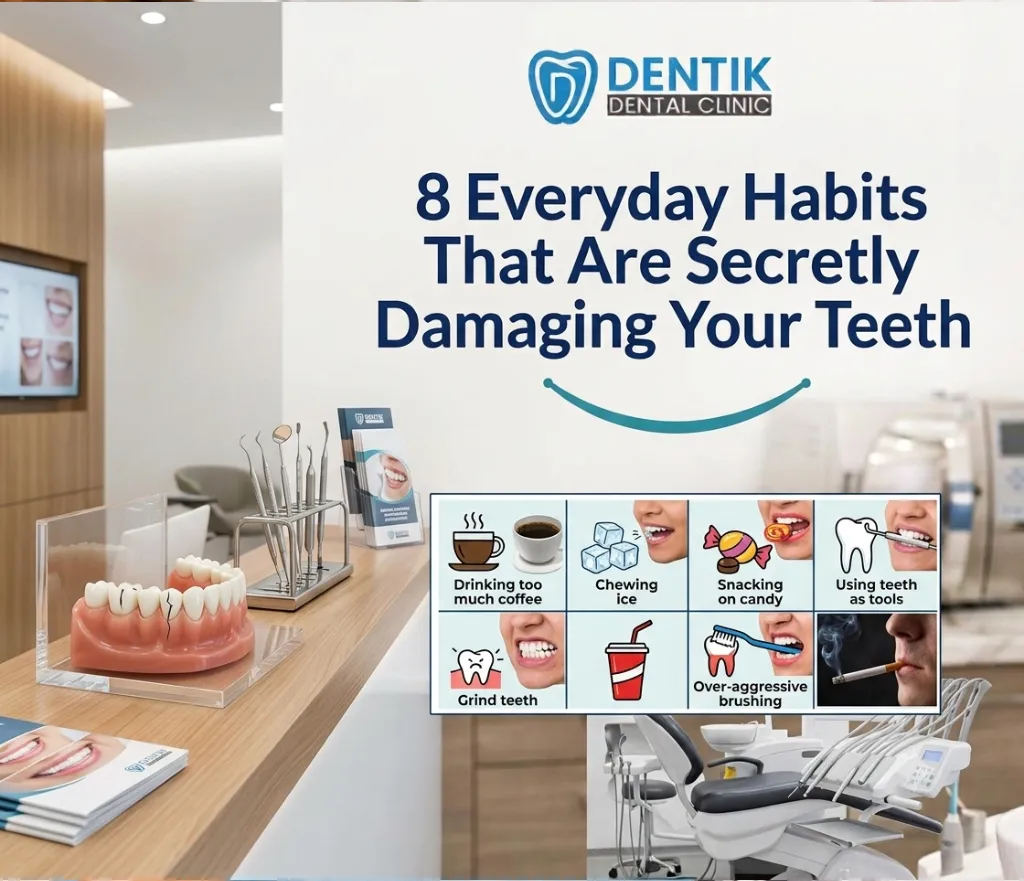
Common habits include chewing ice, using teeth as tools, consuming sugary drinks frequently, brushing too aggressively, skipping interdental cleaning, grinding teeth, ignoring sensitivity, and avoiding regular dental visits.
Can brushing too hard damage teeth?
Yes. Excessive brushing pressure can contribute to gum irritation, enamel wear, and increased tooth sensitivity. A soft-bristled toothbrush and gentle technique are generally recommended.
Is chewing ice bad for your teeth?
Yes. Regularly chewing ice can put significant pressure on teeth and may cause cracks, chips, or damage to existing dental restorations.
How often should I visit a dentist?
The ideal frequency depends on your individual oral health. Many people benefit from routine dental examinations, while those with specific dental concerns may need more frequent visits.
Small Habits. Big Impact on Your Smile.
Your teeth work hard every day, and some of the habits you barely notice can gradually affect their strength and appearance. The good news is that changing these habits today can help protect your teeth for years to come.
Brush gently, clean between your teeth, limit frequent sugar exposure, protect your teeth from unnecessary pressure, and don’t ignore unusual symptoms.
If it’s time for your next dental examination or professional cleaning, book an appointment with Dentik Dental Clinic and take a proactive step toward a healthier smile.