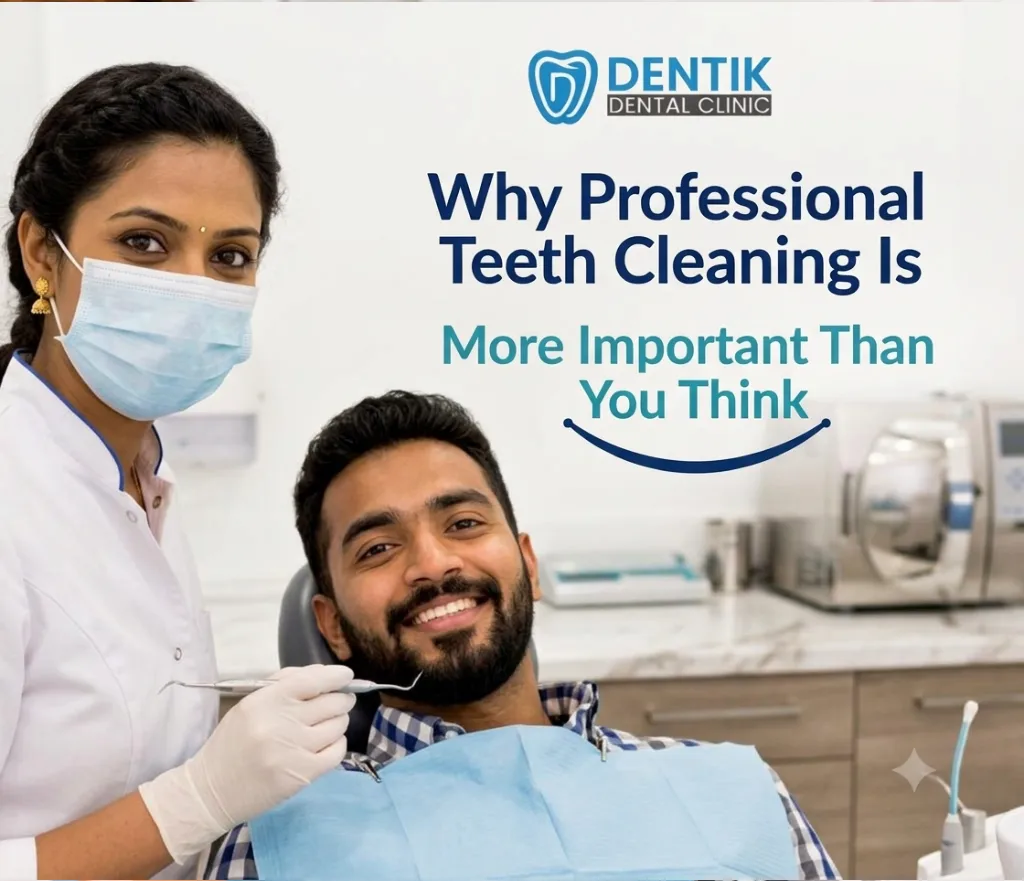
Brushing and flossing every day are essential for maintaining a healthy smile, but they cannot always remove every trace of plaque and tartar. Over time, hardened deposits can accumulate around the teeth and gumline, creating an environment where harmful bacteria can thrive.
This is where professional dental cleaning becomes important. If you’re searching for teeth cleaning near me, understanding what professional cleaning does—and why it should be part of your preventive dental routine—can help you make better decisions about your oral health.
At Dentik Dental Clinic, professional cleaning focuses not only on making your teeth feel cleaner but also on supporting healthier gums, fresher breath, and long-term oral wellness.
What Is Professional Teeth Cleaning?
Professional teeth cleaning, often called dental prophylaxis, is a preventive procedure performed by a dental professional to remove plaque, tartar, and surface stains that regular brushing may not eliminate completely.
During a routine cleaning, your dental team may:
- Examine your teeth and gums
- Remove plaque and tartar deposits
- Clean around the gumline
- Polish the tooth surfaces
- Check for early signs of dental problems
- Provide personalized oral hygiene guidance
The exact cleaning approach depends on your oral health and the amount of buildup present.
Why Isn’t Brushing Enough?
Brushing removes a significant amount of everyday plaque, but some deposits can remain in difficult-to-reach areas.
When plaque isn’t removed effectively, it can harden into tartar or calculus. Unlike soft plaque, tartar cannot be completely removed with a regular toothbrush.
Tartar buildup around the gumline can contribute to:
- Gum inflammation
- Bleeding gums
- Bad breath
- Gum recession
- Periodontal problems
Professional cleaning helps remove these hardened deposits safely.
1. Helps Prevent Gum Disease
Healthy gums are essential for maintaining healthy teeth. Plaque and tartar around the gumline can irritate the gums and contribute to inflammation.
Early gum problems may cause:
- Red or swollen gums
- Bleeding while brushing
- Tenderness
- Persistent bad breath
Regular professional cleaning, combined with good home care, can help manage plaque buildup and support healthier gums.
If you’re experiencing persistent gum bleeding or swelling, don’t wait for your next routine cleaning. A dental evaluation can help identify the underlying cause.
2. Helps Reduce Tartar Buildup
Tartar forms when plaque hardens on the tooth surface. It commonly develops around areas that are difficult to clean thoroughly at home.
Once tartar forms, brushing cannot simply remove it.
A professional dental cleaning allows your dentist or hygienist to carefully remove these deposits while minimizing damage to the surrounding tissues.
This is one of the key reasons regular cleaning is different from simply brushing your teeth more frequently.
3. Can Help Prevent Cavities
Plaque contains bacteria that produce acids when they interact with sugars from food and drinks. Over time, these acids can weaken tooth enamel and contribute to tooth decay.
Professional cleaning doesn’t replace daily brushing, but it complements your home routine by helping control plaque and tartar buildup.
Your dentist can also identify early signs of decay during your examination and recommend appropriate preventive or restorative treatment.
4. Supports Fresher Breath
Persistent bad breath can sometimes be linked to bacteria, plaque, tartar, gum problems, or food particles trapped between teeth.
Professional cleaning can remove accumulated deposits that contribute to unpleasant mouth odors.
However, if bad breath continues despite good oral hygiene and regular cleaning, it may indicate another underlying oral or medical concern that requires evaluation.
5. Helps Detect Dental Problems Early
One of the biggest advantages of a professional dental visit is that it isn’t only about cleaning.
During a routine appointment, your dental team may identify early signs of:
- Tooth decay
- Gum disease
- Damaged fillings
- Cracked teeth
- Oral infections
- Enamel wear
- Other oral health concerns
Early detection can allow treatment to begin before a minor issue develops into a more complicated problem.
6. Helps Maintain Your Smile’s Appearance
Coffee, tea, certain foods, and tobacco can contribute to surface staining.
Professional cleaning and polishing can help remove some external stains and restore a cleaner appearance to your teeth.
It’s important to understand that professional cleaning is not the same as teeth whitening. Cleaning removes plaque, tartar, and some surface stains, while whitening treatments are specifically designed to lighten tooth color.
Who Should Consider Professional Teeth Cleaning?
Professional cleaning can benefit people of different ages and oral health backgrounds.
It may be particularly important if you:
- Have frequent tartar buildup
- Experience bleeding gums
- Have persistent bad breath
- Drink coffee or tea frequently
- Use tobacco products
- Have orthodontic appliances
- Find flossing difficult
- Have a history of gum disease
Your dentist can recommend a cleaning schedule based on your individual oral health rather than following the same frequency for everyone.
How Often Should You Get Your Teeth Professionally Cleaned?
There isn’t one universal schedule that works for every patient.
Many people benefit from routine dental visits every six months, while individuals with gum disease, heavy tartar buildup, orthodontic appliances, or other specific concerns may require more frequent professional care.
Your dentist can assess your oral health and recommend an appropriate interval.
The important point is consistency. Professional cleaning works best as part of an ongoing preventive dental routine.
What Happens During a Professional Teeth Cleaning?
A typical cleaning appointment may involve several steps.
Step 1: Oral Examination
Your dental team checks your teeth, gums, and overall oral condition.
Step 2: Plaque & Tartar Removal
Specialized dental instruments are used to remove hardened deposits from the teeth and gumline.
Step 3: Tooth Polishing
The tooth surfaces may be polished to remove certain surface stains and leave them feeling smoother.
Step 4: Oral Hygiene Guidance
Your dentist may recommend brushing, flossing, or other home-care techniques based on your needs.
Step 5: Further Treatment If Required
If the examination identifies cavities, gum disease, or another concern, your dentist can explain the appropriate treatment options.
Professional Cleaning vs Regular Brushing
| Regular Home Care | Professional Cleaning |
| Removes everyday plaque | Removes plaque and hardened tartar |
| Performed daily | Performed periodically |
| Supports everyday hygiene | Provides professional preventive care |
| Helps control bacteria | Helps manage deposits in difficult areas |
| Depends on individual technique | Performed using specialized dental instruments |
Both are important. Professional cleaning should complement—not replace—your daily oral hygiene routine.
What Happens If You Skip Professional Cleaning?
Skipping dental cleanings doesn’t automatically mean you’ll develop a serious dental problem. However, accumulated plaque and tartar can increase the risk of oral health issues, particularly when home cleaning is incomplete.
Over time, untreated buildup may contribute to gum inflammation, persistent bad breath, tooth decay, and periodontal problems.
Regular dental visits also provide an opportunity to identify concerns early.
How to Maintain Clean Teeth Between Dental Visits
Professional cleaning is only one part of maintaining oral health.
Follow these simple habits:
Brush Twice Daily
Use fluoride toothpaste and spend enough time cleaning all tooth surfaces.
Clean Between Your Teeth
Floss or use an appropriate interdental cleaning method to remove plaque from areas your toothbrush cannot reach.
Clean Your Tongue
Gently cleaning your tongue can help reduce bacterial buildup.
Drink Water
Staying hydrated supports saliva production and helps your mouth naturally clear food particles.
Limit Frequent Sugary Snacks
Repeated sugar exposure can increase the risk of tooth decay.
Don’t Ignore Warning Signs
Bleeding, swelling, pain, or persistent bad breath deserves professional attention.
Professional Cleaning and Your Long-Term Oral Health
A clean smile is more than an aesthetic benefit. Keeping plaque and tartar under control supports healthier teeth and gums and gives your dentist an opportunity to identify potential concerns early.
If you’re looking for the best dentist near me, choose a dental practice that views professional cleaning as part of a broader preventive-care strategy rather than an isolated procedure.
At Dentik Dental Clinic, our approach combines professional evaluation, personalized preventive guidance, and appropriate dental treatment to help patients maintain healthier smiles.
Why Choose Dentik Dental Clinic?
At Dentik Dental Clinic, we believe preventive dentistry should be simple, comfortable, and personalized.
Patients looking for a trusted dental clinic in Kanakapura Road can receive professional dental evaluation and cleaning along with guidance tailored to their oral health needs.
Our focus is on identifying concerns early, maintaining healthy gums and teeth, and helping patients build practical oral hygiene habits that they can follow every day.
Frequently Asked Questions
Is professional teeth cleaning painful?
Most routine cleanings are comfortable. Some patients may experience temporary sensitivity, particularly when there is significant tartar buildup or gum inflammation.
How long does a professional dental cleaning take?
The duration depends on the amount of plaque and tartar buildup and your overall oral health. A routine cleaning generally takes less time than a more extensive periodontal cleaning.
Can teeth cleaning remove yellow stains?
Professional cleaning can remove plaque, tartar, and some surface stains. Deeper tooth discoloration may require a separate professional whitening treatment.
Can I get my teeth cleaned if my gums bleed?
Yes, but bleeding gums should not simply be ignored. They can be a sign of gum inflammation or disease, so your dentist should evaluate the cause and recommend suitable care.
How often should I get professional teeth cleaning?
The appropriate frequency varies by individual. Your dentist can recommend a schedule based on your oral hygiene, tartar buildup, gum health, and other risk factors.
Give Your Smile More Than a Daily Brush
Brushing and flossing form the foundation of good oral hygiene, but professional dental cleaning adds another important layer of preventive care. Removing hardened tartar, checking gum health, identifying early dental problems, and receiving personalized guidance can all contribute to better long-term oral health.
Don’t wait until plaque buildup becomes a painful problem. Make professional dental care part of your regular smile-care routine.
Looking for professional teeth cleaning? Book an appointment with Dentik Dental Clinic today and take a proactive step toward healthier teeth and gums.